Choosing a glass bottle supplier in China involves more than comparing prices on a product page. A clear photograph cannot show whether the neck finish fits your cap or whether the bottle arrives safely after long-distance shipping. Details matter.
This guide to China’s top 10 wholesale glass bottle suppliers explains what buyers can examine before requesting a quotation. You’ll find practical checks for bottle capacity, dimensions, glass color, finish quality, customization options, minimum order quantities, lead times, and protective packaging. Ask for a sample when possible. Inspect it in person, test your intended closure, and compare its measurements with the supplier’s specification sheet. These simple steps can reveal mismatches before a larger order is produced.
What should I check when buying wholesale glass bottles? Start with the intended use, then confirm each technical detail in writing. Request current product information, clear photos, sample terms, and a breakdown of costs, including packaging and shipping. Ask how the supplier manages quality checks and handles defects. Their answers should be specific and consistent, not just reassuring. Small flaws travel.
Supplier rankings can help narrow your search, but they cannot replace direct verification. Listings change, and a strong first impression does not guarantee every shipment will match the sample. I would also avoid treating the lowest quote as the best value; I have seen how missing details create avoidable delays. Use the following checks to compare suppliers fairly and choose bottles that suit your product, budget, and handling needs.
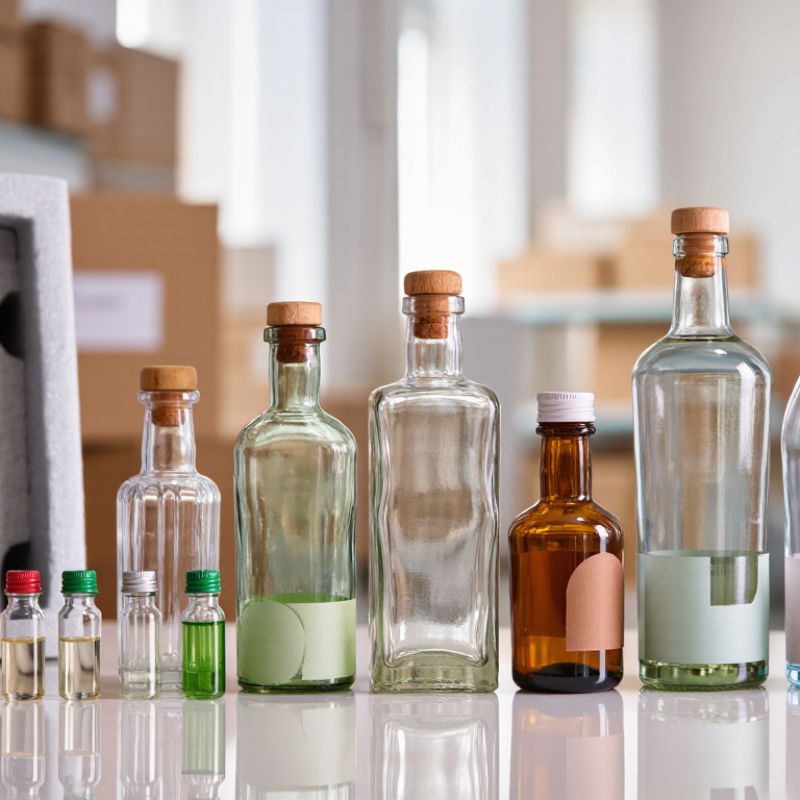
Before contacting a wholesaler, define the bottle’s job. List the product, fill volume, neck finish, closure type, and expected storage conditions. A 250 ml bottle for a thick liquid may need a wider opening than one for a thin drink. Measure the cap and label area, too. Small mismatches can slow filling or make labels wrinkle.
Weight and dimensions affect more than appearance. Request a drawing with height, diameter, brimful capacity, and tolerances. Ask for sample bottles, then test them on your filling line and check how they sit in cartons. Glass is rigid, but it can chip under impact. The US Environmental Protection Agency’s 2018 Advancing Sustainable Materials Management report recorded a 31.3% recycling rate for glass containers and packaging. That figure describes US waste management, not every market, but it makes recycled-content and end-of-life questions worth asking.
Specify color, surface finish, decoration, and acceptable defect levels in writing. Request test results for wall thickness, leakage, and drop performance, and clarify how inspection samples are selected. These details are easy to overlook. I would also confirm pallet pattern, protective dividers, and carton strength before approving a large order; a perfect sample means little if bottles arrive chipped. Leave room for a correction round. Requirements often look clear until the first production sample arrives.
When comparing China’s top 10 wholesale glass bottle suppliers, look beyond catalog photos. Check whether each supplier offers the same glass type, capacity, neck finish, and color. A 500 ml bottle may look identical online but use a different opening. Ask for technical drawings and a physical sample. Measure the height, base width, and neck with calipers. Small differences can affect filling lines and closures.
Compare glass weight and thickness, too. A heavier bottle can feel more substantial, but it may raise freight costs. Ask how the supplier checks for cracks, uneven seams, and bubbles. Request recent inspection records or a sample quality report. Then compare minimum order quantities, sample fees, production lead times, and packaging details. “Protective packing” is vague. Confirm whether bottles are separated by dividers and how cartons are stacked for shipment.
Communication matters. Send the same detailed inquiry to all ten suppliers, then compare how clearly they answer. Ask who handles quality checks and what happens when a batch fails agreed specifications. Get prices based on matching quantities and delivery terms; otherwise, the figures can mislead. I have found that neat samples do not always reflect a full production run. That deserves a second check. Request samples from a production batch when possible, and record any changes in weight, dimensions, or finish before placing a larger order.
| No. | Comparison Dimension | Data to Record from Each Supplier | What to Compare or Check | Recommended Evidence |
|---|---|---|---|---|
| 1 | Glass Material | Soda-lime, borosilicate, or other glass type | Soda-lime glass is commonly used for food, beverage, cosmetic, and pharmaceutical packaging. Borosilicate glass is generally selected when higher thermal-shock resistance is required. | Material specification, technical data sheet, and product sample |
| 2 | Nominal Capacity | Nominal volume and brimful capacity in millilitres | Compare the stated fill volume, brimful capacity, usable fill level, and actual sample measurement. The same nominal volume may have different shoulder and base proportions. | Dimension drawing, capacity report, and calibrated sample measurement |
| 3 | Dimensions and Tolerances | Height, body diameter, neck diameter, weight, and permitted tolerances | Check whether dimensions match the filling line, label, carton, divider, and closure. Require written tolerances rather than relying only on catalogue dimensions. | Approved technical drawing with revision number and inspection report |
| 4 | Neck Finish and Closure Fit | Neck-finish designation, thread or crimp type, and closure size | The bottle neck must match the selected cap, pump, dropper, cork, or crimp seal. Compare sealing performance, torque requirements, leakage risk, and closure availability. | Neck-finish drawing, closure compatibility test, and leak-test record |
| 5 | Glass Weight and Lightweighting | Average unit weight and weight tolerance in grams | Lower weight can reduce freight and material use, but it must not compromise handling, stacking, internal pressure, or impact resistance. | Weight-control specification, batch data, and physical samples |
| 6 | Strength and Safety Testing | Thermal-shock, internal-pressure, impact, and vertical-load test results where applicable | Test requirements depend on the application. Carbonated products require appropriate pressure performance; hot-fill or sterilized products require suitable thermal-shock resistance. | Recent laboratory reports, test methods, sample size, and acceptance criteria |
| 7 | Food and Product Contact Compliance | Applicable market, declarations, migration testing, and restricted-substance controls | Compliance depends on the destination market and product category. Confirm requirements for food, beverage, cosmetic, or pharmaceutical contact before placing an order. | Declaration of compliance, migration test report, and material-control statement |
| 8 | Surface Finish and Decoration | Clear, amber, green, frosted, coated, printed, or labelled finish | Compare colour consistency, transparency, coating durability, print adhesion, label application, and resistance to moisture or filling-line handling. | Colour samples, decoration approval sample, rub test, and coating specification |
| 9 | Packaging and Export Protection | Pieces per carton, cartons per pallet, separator type, pallet size, and container loading plan | Compare breakage protection, carton strength, moisture protection, pallet stability, usable container quantity, and total delivered cost. | Packing specification, pallet photos, loading plan, and pre-shipment inspection record |
| 10 | Commercial Terms and Supply Reliability | MOQ, sample cost, tooling cost, quoted price basis, lead time, payment terms, and defect policy | Compare like-for-like quotations using the same specification and Incoterm. Separate one-time tooling charges from recurring unit prices and confirm production capacity. | Formal quotation, proforma invoice, production schedule, quality agreement, and corrective-action policy |
When comparing wholesale glass bottles, inspect physical samples rather than relying on polished catalog photos. Look through each bottle against a bright window. Uneven color, trapped bubbles, or wavy walls may signal inconsistent production. Feel the rim and base; rough edges and a rocking base deserve questions. Small flaws happen, but repeated flaws matter.
Ask what glass composition is used and whether it suits your product, filling temperature, and storage conditions. Request written specifications for capacity, weight, neck dimensions, and acceptable tolerances. Check that the closure fits snugly, then test filled samples for leaks during ordinary handling. Keep the results. One sample cannot represent an entire shipment, so this check is useful, not conclusive.
Customization should be assessed with the same care. Confirm bottle dimensions, glass color, surface finish, and decoration method before approving production. A printed proof may look different on curved glass. A color swatch can mislead. Request a finished preproduction sample, and compare it under the lighting where customers will see it. Also clarify setup costs, minimum order quantities, lead times, and how defects are handled. I would not assume every specification is negotiable; some limits come from the mold or production line. Verify the details in writing.
Before ordering wholesale glass bottles, define the destination market and intended use. Requirements differ for food, cosmetics, and household packaging. Request a current declaration of compliance and test reports covering the exact bottle, closure, coating, and use. A generic certificate is not enough. In the United States, food-contact materials must comply with applicable FDA requirements, but FDA generally does not issue a blanket bottle certificate. Ask for supporting material and migration-test evidence.
For food-contact bottles sold in the European Union, check applicable requirements under Regulation (EC) No 1935/2004 and good manufacturing practices under Regulation (EC) No 2023/2006. Confirm that colored, printed, or coated surfaces are included in relevant tests. For China-made bottles, ask which current Chinese GB standards apply to the product’s specific use. Request the test method and report date. Details matter.
Match the report’s model number, glass type, decoration, and manufacturing site to your sample. Check test results, laboratory accreditation, and batch traceability. ISO 9001 concerns a quality-management system; it does not prove food-contact safety. Small mismatch, big risk. Paperwork can miss production changes, so compare a pre-shipment sample with approved specifications. This step is often skipped. Ask suppliers to explain any difference before approving the order.
Key reference dates for checking food-contact compliance and supplier quality documentation.
The bars show publication years, not compliance scores. For China, check the applicable editions of GB 4806.1 and GB 4806.5 and request relevant food-contact test reports. For EU sales, verify applicable requirements under Regulations (EC) No 1935/2004 and (EC) No 2023/2006. ISO 9001 is a quality-management-system certification, not product approval. Confirm current requirements for the destination market and intended use.
When comparing wholesale glass bottle prices, ask for a complete cost breakdown, not just a unit price. Check whether quotes include bottle color, closure compatibility, carton dividers, palletization, and mold charges. Request prices at several order volumes; a low minimum order may carry a higher unit cost. Small trials matter. Confirm whether samples come from production tooling or differ from the final run.
Shipping terms can change the real cost quickly. Drewry’s World Container Index fell from about US$10,377 per 40-foot container in September 2021 to roughly US$1,342 in August 2023. That swing shows why a freight quote needs a date and validity period. Ask whether the price is EXW, FOB, or delivered, and who pays port fees, insurance, and customs-related charges. Get the shipment’s carton dimensions, pallet count, gross weight, and loading plan in writing. Glass is heavy; a few extra pallets can matter.
For minimum orders, clarify whether quantities apply per design, color, or bottle size. Also ask how the supplier handles short shipments and breakage, and what evidence is required for a claim. Keep the terms in the purchase order, not only in chat messages. I would still question unusually cheap quotes; they may omit protective packaging or inland transport. The cheapest offer is not always the lowest landed cost.
Compare glass type, capacity, neck finish, color, weight, and thickness. A 500 ml bottle may have a different opening. Request technical drawings and physical samples.
Measure the height, base width, and neck with calipers. Check the closure on a filled sample. Small differences can affect filling lines.
Hold each bottle against a bright window. Look for uneven color, trapped bubbles, wavy walls, and visible seams. Feel the rim and base. A rocking base needs attention.
Ask for recent inspection records or a quality report. Request samples from a production batch when possible. One sample is useful, but not conclusive.
Ask which glass composition is used. Confirm that it suits your product, filling temperature, and storage conditions. Written specifications are safer than verbal promises.
Ask how bottles are separated inside cartons. Confirm whether dividers protect each bottle and how cartons are stacked during shipment. “Protective packing” sounds helpful, but remains vague.
Compare prices using matching quantities and delivery terms. Include sample fees, minimum order quantities, production time, and packaging costs. Otherwise, the figures may mislead.
Confirm dimensions, glass color, surface finish, and decoration method in writing. Request a finished preproduction sample. Printed proofs and color swatches can look different on curved glass.
Ask who manages quality checks and what happens when specifications are missed. Clarify defect handling before production begins. I would not assume every requirement is negotiable. Some limits come from the mold.
Choosing the right wholesale glass bottle supplier in China starts with defining your requirements: intended use, bottle capacity, shape, color, closure type, and any customization you need. When comparing suppliers, look beyond catalog range and consider communication, production capability, sample availability, lead times, and consistency. What should I check when buying wholesale glass bottles? Pay close attention to glass material and thickness, finish quality, dimensional accuracy, and whether printing, labeling, or other custom features can be produced reliably.
Before placing an order, verify relevant product certifications and documentation for your intended market and application. Compare quotations carefully, including unit prices, tooling or customization costs, minimum order quantities, payment terms, packaging, and shipping arrangements. Clarify how products are inspected, how defects are handled, and what delivery timelines are realistic. A clear specification and written agreement can help reduce misunderstandings and make it easier to assess overall value—not just the lowest quoted price.

Bogart Glass